乔治有一些同样长的小木棍,他把这些木棍随意砍成几段,直到每段的长都不超过 5050。
现在,他想把小木棍拼接成原来的样子,但是却忘记了自己开始时有多少根木棍和它们的长度。
给出每段小木棍的长度,编程帮他找出原始木棍的最小可能长度。

乔治有一些同样长的小木棍,他把这些木棍随意砍成几段,直到每段的长都不超过 5050。
现在,他想把小木棍拼接成原来的样子,但是却忘记了自己开始时有多少根木棍和它们的长度。
给出每段小木棍的长度,编程帮他找出原始木棍的最小可能长度。
 分享
分享
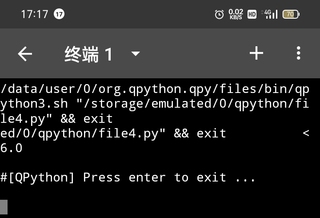
代码
#!/sur/bin/nve python
# coding: utf-8

def findLong(lis):
    count = sum(lis)
    factors = [i for i in range(1, int(count/min(lis))+1) if (not count%i) and count/i >= max(lis)]
    return count/factors[-1]


if __name__ == '__main__':
    text = '''
9
5 2 1 5 2 1 5 2 1'''
    text2 = '''
5
2 2 2 2 2'''
    text3 = '''
7
6 8 1 2 5 2 9'''
    print(findLong(list(map(float, text.split('\n')[-1].split()))))
先前的不妥题解——

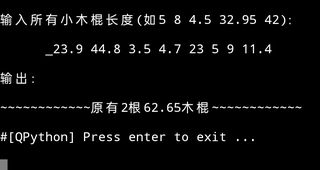
代码
#!/sur/bin/nve python
# coding: utf-8

def recount(nums):
    nums = tuple(map(float, nums))
    count = sum(nums)

    if count < 50 or max(nums) > 50 :
        print(' 输入错误!'.center(35, '~'))
        exit()

    n = count//50
    count %= 50

    return n, 50+count/n

if __name__ == '__main__':
    result = recount(input(f"\n输入所有小木棍长度(如5 8 4.5 32.95 42):\n\n{'':>6}_").strip().split())
    print(f"\n输出:\n\n{f'原有{result[0]:.0f}根{result[-1]:.2f}木棍':~^35}")
 系统已结题
4月10日
系统已结题
4月10日 已采纳回答
4月2日
创建了问题
10月8日
已采纳回答
4月2日
创建了问题
10月8日


