假如输入8行8列的字符串,我想将其赋给数组,但是,总是会出现?,数组为空的情况。这是因为每行字符串的末尾会有一个“\0”吗?
我应该怎么避免将“\0”赋给二维数组?
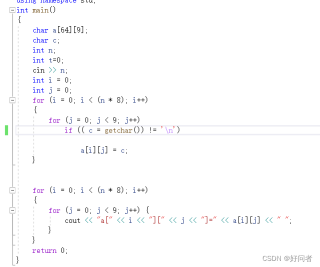
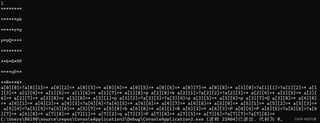

假如输入8行8列的字符串,我想将其赋给数组,但是,总是会出现?,数组为空的情况。这是因为每行字符串的末尾会有一个“\0”吗?
我应该怎么避免将“\0”赋给二维数组?
 分享
分享
 关注
关注【以下回答由 GPT 生成】
#include <iostream>
#include <string>

int main() {
    std::string input = "abcdefgh 12345678\n"
                        "ijklmnop 23456789\n"
                        "qrstuvwx 34567890\n"
                        "yzabcdefg 45678901\n"
                        "hijklmno 56789012\n"
                        "pqrstuvw 67890123\n"
                        "xyzabcd 78901234\n"
                        "efghijk 89012345";

    const int rows = 8;
    const int cols = 8;

    char array[rows][cols];
    int index = 0;

    for (int i = 0; i < rows; ++i) {
        for (int j = 0; j < cols; ++j) {
            while (input[index] == ' ' || input[index] == '\n' || input[index] == '\r') {
                ++index;  // skip spaces and newlines
            }
            array[i][j] = input[index];
            index++;
        }
    }

    // Print the 2D array
    for (int i = 0; i < rows; ++i) {
        for (int j = 0; j < cols; ++j) {
            std::cout << array[i][j] << " ";
        }
        std::cout << std::endl;
    }

    return 0;
}
这段代码可以解决你的问题。首先,我们定义了一个8行8列的字符串,并且创建了一个8行8列的二维数组。然后使用两层循环遍历字符串,并且使用一个索引变量来跳过空格和换行符。在每个非空格非换行符的字符处,将其赋给二维数组。最后,再遍历二维数组并打印每个元素,可以看到正确地避免了空格和末尾的"\0"。
【相关推荐】
分享 创建了问题
12月7日
创建了问题
12月7日


