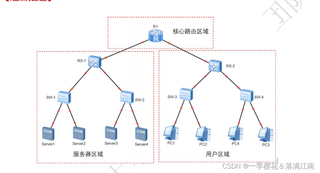
在不改变核心路由区域中路由器数量,并且不改变用户区域接入方式的前
提下(即保持只有一台 R1),对服务器区域的网络拓扑进行修改(可增加或删除
设备,设备类型和数量自定),使得服务器区域的网络有容灾性,即当 RS-1 故障
(例如关闭 RS-1)时,用户区域主机仍然可以通过路由器 R1 访问所有服务器。

 分享
分享
 关注
关注让【道友老李】来帮你解答,本回答参考通义千问qwen-plus编写,并整理提供,如果还有疑问可以点击头像关注,评论或留言### 问题描述 在给定的网络拓扑中,服务器区域(包含 RS-1)需要具备容灾能力,即当 RS-1 故障时,用户区域的主机仍然可以通过路由器 R1 访问所有服务器。在不改变核心路由区域中路由器数量和用户区域接入方式的前提下,对服务器区域的网络拓扑进行修改。
为了实现服务器区域的容灾性,可以采用以下方法:
增加备用服务器 RS-2:
配置负载均衡器:
用户区域
  |
  R1
  |
  LB
 / \
RS-1 RS-2
# /etc/haproxy/haproxy.cfg
global
    log /dev/log    local0
    log /dev/log    local1 notice
    chroot /var/lib/haproxy
    stats socket /run/haproxy/admin.sock mode 660 level admin expose-fd listeners
    stats timeout 30s
    user haproxy
    group haproxy
    daemon

defaults
    log     global
    mode    http
    option  httplog
    option  dontlognull
    timeout connect 5000ms
    timeout client  50000ms
    timeout server  50000ms
    errorfile 400 /etc/haproxy/errors/400.http
    errorfile 403 /etc/haproxy/errors/403.http
    errorfile 408 /etc/haproxy/errors/408.http
    errorfile 500 /etc/haproxy/errors/500.http
    errorfile 502 /etc/haproxy/errors/502.http
    errorfile 503 /etc/haproxy/errors/503.http
    errorfile 504 /etc/haproxy/errors/504.http

frontend http_front
    bind *:80
    default_backend http_back

backend http_back
    balance roundrobin
    server RS-1 192.168.1.101:80 check
    server RS-2 192.168.1.102:80 check
确保 R1 的路由表正确配置,使流量能够通过 LB 访问服务器区域。
# 配置静态路由
ip route add 192.168.1.0/24 via <LB_IP> dev <interface>
假设用户区域的主机 IP 地址为 192.168.0.10,R1 的 IP 地址为 192.168.0.1,LB 的 IP 地址为 192.168.1.1,RS-1 的 IP 地址为 192.168.1.101,RS-2 的 IP 地址为 192.168.1.102。
正常情况下:
http://192.168.1.1,LB 将请求分发到 RS-1 或 RS-2。RS-1 故障时:
http://192.168.1.1 访问服务,不会受到影响。通过增加备用服务器 RS-2 和配置负载均衡器 LB,可以在不改变核心路由区域中路由器数量和用户区域接入方式的前提下,实现服务器区域的容灾性。当 RS-1 故障时,用户区域的主机仍然可以通过路由器 R1 访问所有服务器。
分享 创建了问题
12月16日
创建了问题
12月16日

