
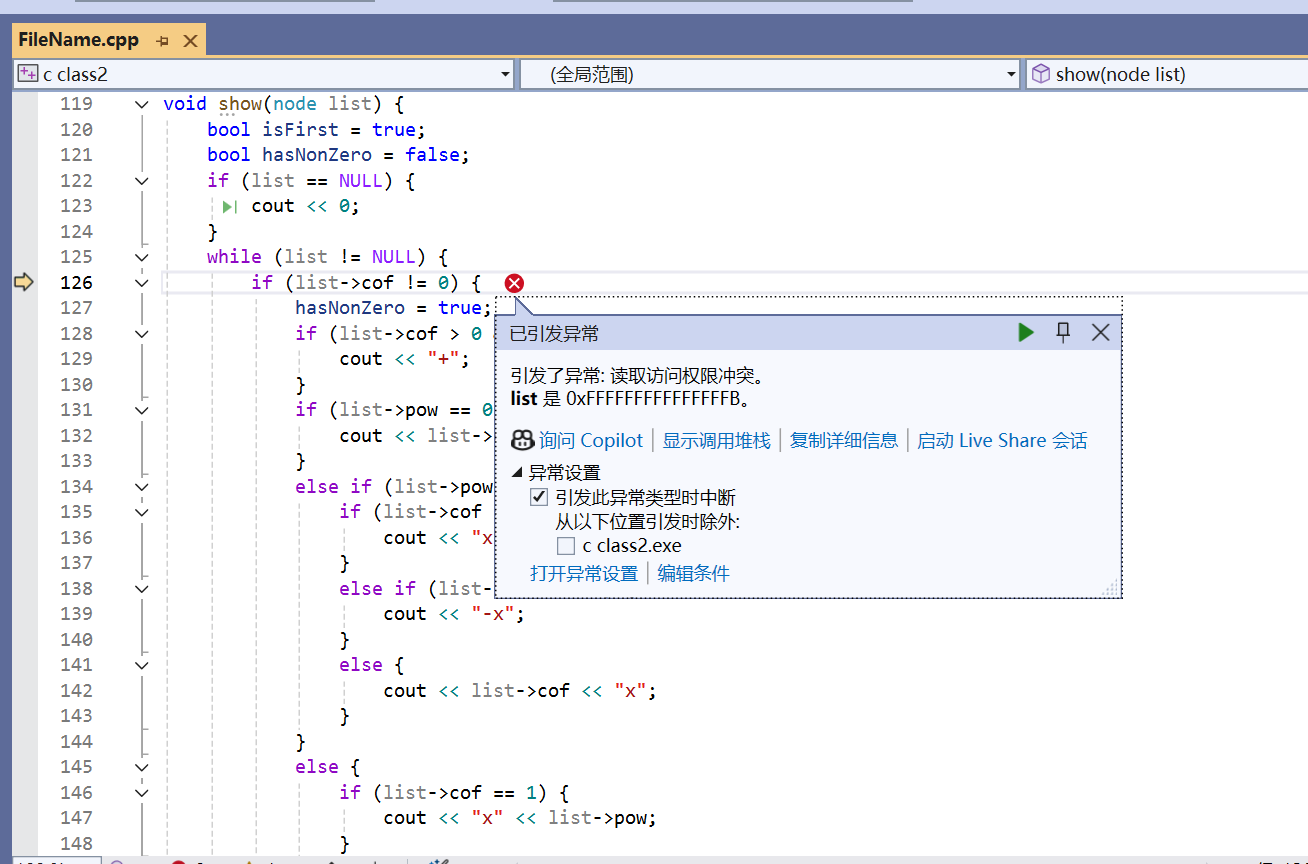
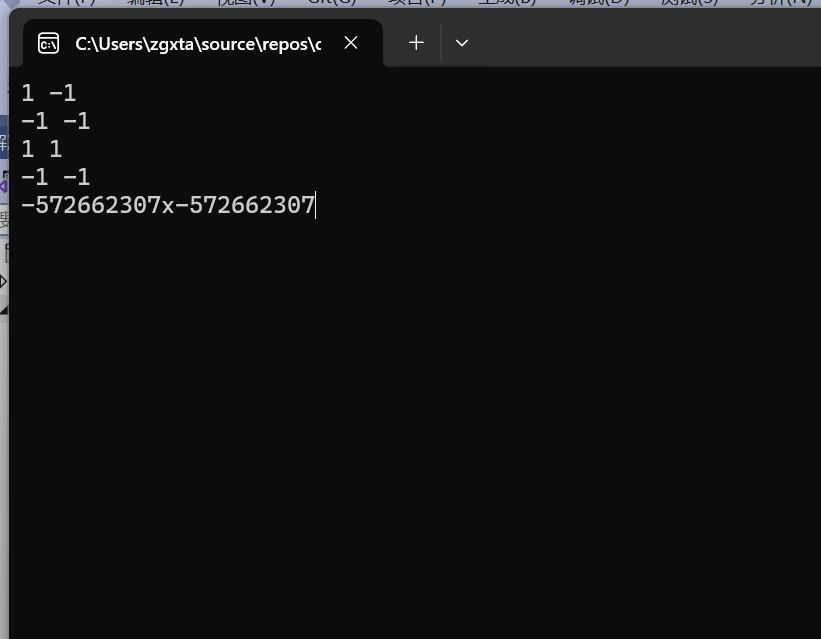
pta上面的一元多项式相加题目,用链表实现遇到了一些问题
#include <iostream>

using namespace std;

struct Node {
    int pow;
    int cof;
    struct Node* next;
};

typedef struct Node* node;

node gettail(node list) {
    node tail = list;
    while (tail->next != NULL) {
        tail = tail->next;
    }
    return tail;
}

void inserttail(node list, int pow, int cof) {
    node tail = gettail(list);
    node newtail = new struct Node;
    newtail->pow = pow;
    newtail->cof = cof;
    newtail->next = tail->next;
    tail->next = newtail;
}

node createlist() {
    node list = new struct Node;
    list->next = NULL;
    int pow, cof;
    while (1) {
        cin >> pow >> cof;
        if (pow == -1 && cof == -1) {
            break;
        }
        inserttail(list, pow, cof);
    }
    return list;
}

node delete_zerocof(node list) {
    node dummy = new struct Node;
    dummy->next = list;
    while (dummy->next != NULL) {
        if (dummy->next->cof == 0) {
            node deleted = dummy->next;
            dummy->next = deleted->next;
            free(deleted);
        }
        else {
            dummy = dummy->next;
        }
    }
    if (list == NULL) {
        node zero = new struct Node;
        zero->cof = 0;
        zero->pow = 0;
        zero->next = list;
        return zero;
    }
    else {
        return  list;
    }
}

node addcof(node list) {
    node p = list;
    while (p->next != NULL) {
        if (p->next->pow == p->pow) {
            node deleted = p->next;
            p->cof += deleted->cof;
            p->next = deleted->next;
            free(deleted);
        }
        else {
            p = p->next;
        }
    }
    node LIST=delete_zerocof(list);
    return LIST;
}

node merge(node list1, node list2) {
    node list = new struct Node;
    node dummy = list;
    node L1 = list1->next;
    node L2 = list2->next;
    while (L1 != NULL && L2 != NULL) {
        if (L1->pow > L2->pow) {
            list->next = L1;
            L1 = L1->next;
        }
        else {
            list->next = L2;
            L2 = L2->next;
        }
        list = list->next;
    }
    if (L1 != NULL) {
        list->next = L1;
    }
    else if (L2 != NULL) {
        list->next = L2;
    }
    return addcof(dummy->next);
}

void showpure(node list) {
    node p = list;
    while (p != NULL) {
        cout << p->cof << "x" << p->pow << " ";
        p = p->next;
    }
}

void show(node list) {
    bool isFirst = true;
    bool hasNonZero = false;
    if (list == NULL) {
        cout << 0;
    }
    while (list != NULL) {
        if (list->cof != 0) {
            hasNonZero = true;
            if (list->cof > 0 && !isFirst) {
                cout << "+";
            }
            if (list->pow == 0) {
                cout << list->cof;
            }
            else if (list->pow == 1) {
                if (list->cof == 1) {
                    cout << "x";
                }
                else if (list->cof == -1) {
                    cout << "-x";
                }
                else {
                    cout << list->cof << "x";
                }
            }
            else {
                if (list->cof == 1) {
                    cout << "x" << list->pow;
                }
                else if (list->cof == -1) {
                    cout << "-x" << list->pow;
                }
                else {
                    cout << list->cof << "x" << list->pow;
                }
            }
        }
        isFirst = false;
        list = list->next;
    }

    if (!hasNonZero) {
        cout << "0";
    }
}

int main()
{
    node list1 = createlist();
    node list2 = createlist();
    node list = merge(list1, list2);
    show(list);
    //showpure(list);

    return 0;
}


